A crown is a tooth-shaped cover placed over a tooth that is badly damaged or decayed. Many people call it a cap.
Crowns
may be placed for several reasons. Usually the tooth has been broken or
severely damaged by decay. As a result, a filling can't replace enough
of the tooth or make the tooth strong enough. A crown may hold together
parts of a cracked tooth. It also can be used to hold a bridge in place.
Crowns can be used to improve appearance as well. They may be placed to
cover misshapen or badly discolored teeth.
Crowns
can be made ahead of time (prefabricated) or made to order in a
laboratory. Prefabricated crowns are made of plastic or stainless steel.
They can be used on a temporary basis until a permanent crown is made.
Crowns can be made of:
- All metal
- Zirconia
- Porcelain fused to metal (PFM)
- Porcelain fused to zirconia
- All ceramic
Metals
include gold alloy, other alloys (palladium) or a base-metal alloy
(nickel or chromium). The all-metal or PFM crowns are stronger and are
better choices for back teeth than ceramic crowns. PFM and all-ceramic
crowns are the same color as your natural teeth. They look just like
normal teeth.
To read the entire article , please visit Colgate.com
 If
you have been experiencing problems with a tooth, you may wonder, "Do I
need a root canal?" Root canals, also known as endodontic therapy, are
performed when the nerve or pulp of the tooth becomes infected and
inflammed due to dental decay, a cracked or broken tooth or an injury to
the tooth, according to the American Dental Association. During the
procedure, a dentist uses a drill to remove both the nerve and pulp and
seals up the tooth to protect against further damage. Only your dentist
or a dental specialist called an endodontist, can determine whether a
root canal will adequately treat your problem. Here are a few possible
symptoms of the need for a root canal and some steps for dealing with
them.
If
you have been experiencing problems with a tooth, you may wonder, "Do I
need a root canal?" Root canals, also known as endodontic therapy, are
performed when the nerve or pulp of the tooth becomes infected and
inflammed due to dental decay, a cracked or broken tooth or an injury to
the tooth, according to the American Dental Association. During the
procedure, a dentist uses a drill to remove both the nerve and pulp and
seals up the tooth to protect against further damage. Only your dentist
or a dental specialist called an endodontist, can determine whether a
root canal will adequately treat your problem. Here are a few possible
symptoms of the need for a root canal and some steps for dealing with
them.
General Possible Symptoms
The
most common symptom that may indicate the need for a root canal is
tooth pain, according to the American Association of Endodontists. The
intensity of the pain can range from mild to severe; it may lessen or
intensify throughout the day, or it may get worse only when you bite
down on the tooth. Some patients experience prolonged sensitivity to hot
food or liquids. Your gums may also feel tender and swollen near the
problem area.
First Steps
If
you notice any of the above symptoms, contact your dentist right away.
Explain your symptoms by phone to a staff member, who may arrange for
you to come in right away or may recommend emergency care depending on
the severity of your symptoms. To soothe the pain and alleviate
swelling, apply an ice pack to the outside of your jaw.
To read the entire article written by Rebecca Desfosse, please visit Colgate.com
BondingNot happy with the way your teeth look? Bonding may be the answer. For some, it can help restore the natural look of your teeth. Bonding is a process where the dentist attaches or “bonds” materials directly to your tooth. Your natural tooth enamel and dentin are fused together with bonding materials such as porcelain and resins to create a strong structure that looks great.
The above article is from: MouthHealthy.org
CrownsA crown is a good way to cover teeth that are discolored or badly shaped. A crown can make your tooth stronger and improve its appearance. Crowns can also be used to attach bridges, protect a weak tooth from breaking or restore one that’s already broken.
The above article is from: MouthHealthy.org
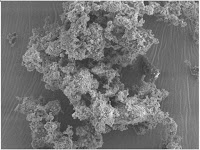
Dentists complete 122 million composite tooth restorations in the United States each year, according to Oregon State University (OSU). But the average lifetime of posterior dental composites is only 6 years. Bioactive glass may improve their durability and provide some of the minerals that have been lost to tooth decay.
“Bioactive glass, which is a type of crushed glass that is able to interact with the body, has been used in some types of bone healing for decades,” said Jamie Kruzic, a professor at the OSU college of engineering. The hard and stiff material can replace the inert glass fillers now mixed with polymers to make modern composite tooth fillings.
“This type of glass is only beginning to see use in dentistry, and our research shows it may be very promising for tooth fillings,” he said. “The bacteria in the mouth that help cause cavities don’t seem to like this type of glass and are less likely to colonize on fillings that incorporate it. This could have a significant impact on the future of dentistry.”
Bioactive glass is made with compounds such as silicon oxide, calcium oxide, and phosphorous oxide, and it looks like powdered glass. Its antimicrobial effect is attributed, in part, to the release of ions such as those from calcium and phosphate that have a toxic effect on oral bacteria and tend to neutralize the local acidic environment.
“Almost all fillings will eventually fail,” Kruzic said. “New tooth decay often begins at the interface of a filling and the tooth and is called secondary tooth decay. The tooth is literally being eroded and demineralized at that surface.”
To read the entire article, please visit DentistryToday.com
Natural-Looking White Fillings
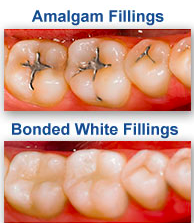
 For some time, the silver-mercury amalgam was the traditional filling material used by dentists, and many practices still use it. While they are a reasonable restoration, amalgams have a couple of problems. Metal does not bond well to teeth, so decay will leak into a tooth. The biggest reason many of our patients select white bonded fillings has to do with the way they look. Many patients just don’t want an ugly metal filling in their teeth. We offer modern restorations that are a natural-looking white, contain no metals, and will actually strengthen your tooth structure. They also bond securely with the healthy part of the tooth so there is much less chance of future dental decay.